Your website's content is often the difference between a visitor who stays and one who leaves. It shapes how people see your brand, whether search engines rank your pages, and if readers come back.
Website content writing is the craft behind all of it, combining research, clear structure, and a deep understanding of your audience to produce pages that actually perform.
This guide explains what website content writing is and covers 17 practical tips to help you create content that ranks well and converts visitors into customers.
What is website content?
Website content includes the written, visual, and interactive elements on your site that provide information and engage visitors. It covers everything from homepage text to blog images, product page videos, and contact forms.
Good content draws people in, keeps them interested, and guides them toward a specific goal. For the website owner, that goal might be a sale, a signup, or simply earning trust.
Website content involves much more than written text on a page.
Content also takes the form of images, infographics, videos, audio files, or any other media that contributes to your site's overall browsing experience.
Yes Theory's About page is a great example. It uses a blend of text, images, videos, and animated elements to create a genuinely pleasant reading experience.

If your website were a house, the content would be the furniture. It is what makes your site usable, engaging, and gives it purpose.
Quality web content also plays a major role in search engine visibility. Well-optimized content helps search engines find, understand, and rank your pages higher through tactics like keyword optimization.
Types of website content
Website content takes many forms, and each one serves a different purpose in your overall strategy:
- Blog posts share insights and attract organic search traffic
- Landing pages focus on converting visitors into leads or customers
- Product descriptions help shoppers understand and evaluate what you sell
- Service pages explain what your business offers and why it matters
- Case studies showcase real results to build trust with prospects
- Ebooks and whitepapers provide in-depth analysis on specific topics
The right format depends on your goals and where your audience sits in their journey.
What is web content writing?
Web content writing is the process of creating any type of written website content including product descriptions, landing page copy, blog posts, e-books, case studies, and so on.
Web content writing aims to engage visitors, provide value, and drive conversions.
Writing for the web allows business owners to show off their brands' personalities, highlight their product's or service's benefit, appeal to their audience's pain points, and establish strong relationships with visitors.
And again, it's ideal for search engine optimization.
Search engines prioritize credible and authoritative websites that offer value through genuinely helpful content.
17 tips to write website content
Now that we covered the basics let's dive into the nitty-gritty and see what amazing content is all about.
Here are 17 steps for writing website content that drives engagement.
1. Write with a purpose
First, you need to define your content's main objective—whether to inform, entertain, or persuade site visitors to convert. This will help you identify the right approach and the appropriate language and word choice.
For example, The Minimalist's article on what minimalism is successfully fulfills its purpose — to educate readers about this lifestyle and its benefits.
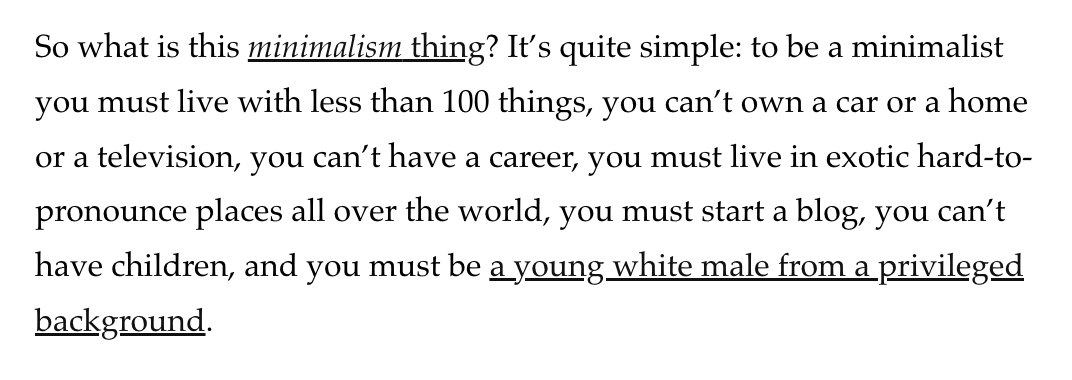
You can tell that the writer takes a humorous, somewhat self-deprecating approach to break down the concept in an entertaining manner.
The article's objective is to obviously explain to readers that they can be minimalists too without being too preachy or overbearing.
The writer also has a natural, simple way of writing that can help tune readers into the article. Coupled with his humor throughout the post, the writer creates a genuinely pleasant reading experience.
In any case, if informative content is your main focus, doing your research is what's most important here.
You want to establish brand authority, provide accurate insights, and ideally bring something new to the table.
This earns your readers' trust, gives them a reason to return to your website, and wins the algorithm's favor.
However, if your content's objective is to sell, it must successfully align your product's or service's benefits with your audience's pinpoints. This tells them why they need your product and compels them to make a purchase.
2. Understand your readers
High-quality content writing is also about adjusting the language and tone based on your readers. This helps resonate with your target audience and craft website copy that's engaging.
It also helps come up with relevant content ideas.
For instance, TheBlondeAbroad knows exactly who she talks to.

The post is about acquiring travel miles and points to save money. It caters to beginners who want to get into long-term traveling and are looking for ways to do it affordably.
The content is highly informative but doesn't get into too many details that may overwhelm readers. It instead offers quick actionable tips along with all the relevant resources to help visitors start flying for cheap.
Google Search Console and Google Analytics are your best friends here.
These free site analytics tools reveal everything you need to know about your site visitors — from their demographics and location to interests and more.
You can use that information to create data-backed audience personas and tailor your content guidelines.
3. Start with a strong hook
A generic intro or product description will probably get visitors to click the back button just as soon as they land on your web page.
Your opening statements need to catch and maintain the reader's attention.
You can either start strong with a bold statement or engage with readers directly and spark their curiosity through questions.
Getting to the meat of the content as soon as possible also works.
Cup of Jo, for example, starts with an ambiguous title on purpose. "A Parenting Realization That Really Moved Me" sounds mysterious and appeals to its target audience's emotions — it's a magnet for clicks.

The opening builds up suspense and uses storytelling to paint a picture in the reader's mind. This gets readers glued to the content right away and nudges them to keep reading.
Here are a few methods to write openings that generate a similar effect:
The Problem-Agitate-Solution (PAS) formula: Acknowledge and empathize with the audience's main pain points right away, then press on the outcomes of their problems to instill a sense of urgency, and tease a solution to add a sense of relief and motivate visitors to read on.
The Attention-Interest-Desire-Action (AIDA) formula: Start with a bold claim to attract attention and move on to an interesting fact or statistic to maintain interest. Then explain exactly how the content helps readers to turn that interest into a desire and finish with a call to action.
The Bottom-Line-Up-Front (BLUF) formula: Cut to the case and highlight the most important information in the opening, then use the rest of the content to get into the details.
4. Adopt the right tone
An appropriate tone makes content resonate with your target audience and conveys the message more effectively.
As a general rule of thumb, stick with a conversational writing style. It's engaging and strikes a good balance between sounding friendly and personal yet not too informal.
However, the right tone for your website content also depends on your brand's personality and niche.
For example, if you mainly discuss more serious topics, like medicine or finance, you can use more formal language.
It helps establish trust — overly playful language would sound unprofessional and off-putting here.
If you cover trivial subjects, on the other hand, don't be afraid to go on the opposite side of the spectrum. Just like Wait But Why does.

The blog post doesn't shy away from slang or jokes, and generally adopts a playful language — it aligns well with the topic, target audience, and the brand's identity.
Make sure to take all these factors into account when you write content.
5. Use language your readers understand
It's still important to note that content filled with industry-specific jargon and pompous language doesn't impress anyone—it just confuses readers.
Even if you want to write in a more formal tone, use simple terms to ensure you get your message across to all your readers.
Aim for a fifth-grade reading level.
That means simple words, short sentences, and no large blocks of text. Here's how Zen Habits does it:
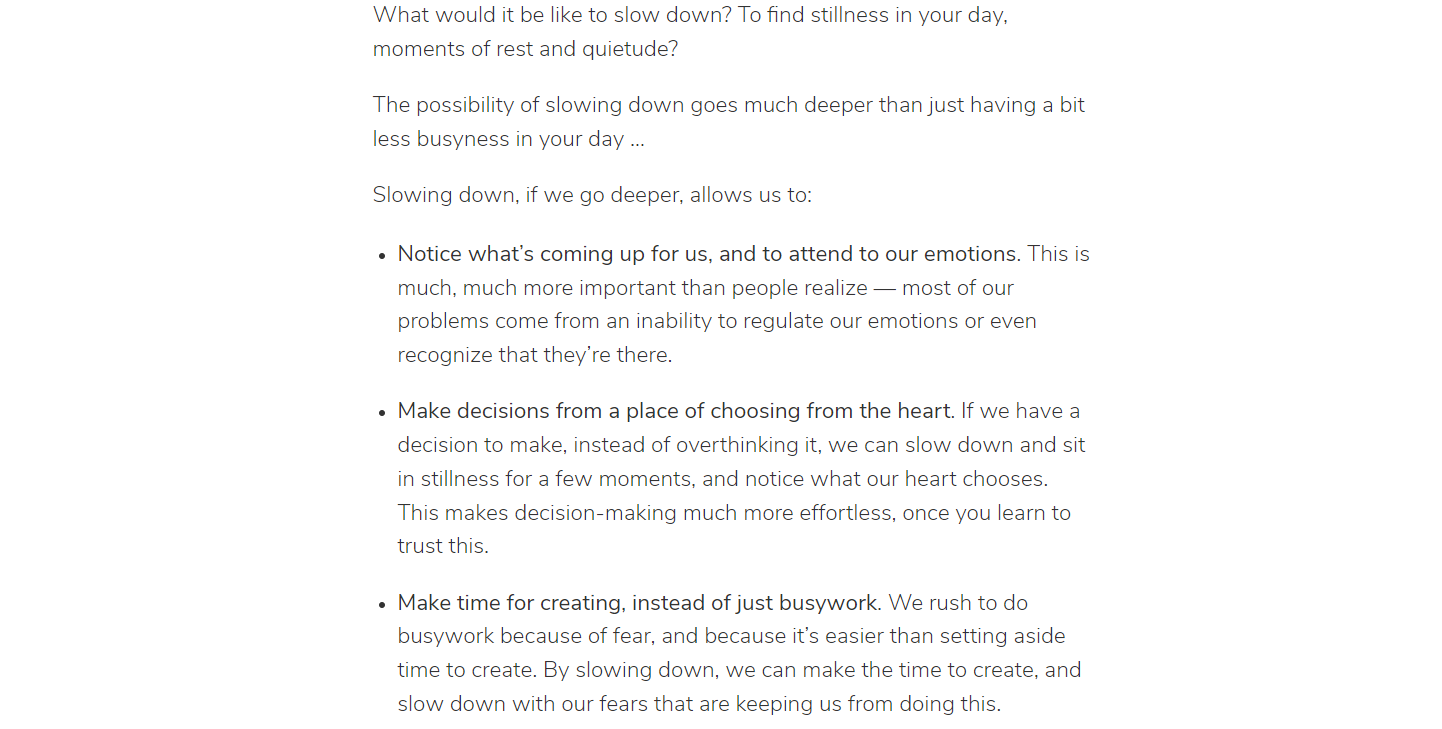
The sentences are concise, while the content's structure is nice and tidy.
Paragraphs are double-spaced and the writer uses bullet points to break down the post's ideas.
This makes the blog post a breeze to read through and understand — you should follow a similar format.
And most importantly, avoid passive voice and adverbs. They drag out your content and make it hard to read.
Here's a brief comparison between passive and active voice:
- Passive voice: "The event was organized by him."
- Active voice: "He organized the event."
The second sentence sounds much more natural and easy to read.
Tools like Hemingway Editor help spot any excessive adverb or passive voice usage throughout your content.
6. Optimize for search engines
Search engine optimization (SEO) is what makes your website content discoverable. No matter how well-written your pages are, they need to be optimized so search engines can find, understand, and rank them.
SEO is critical because even the best content won't get read if search engines can't index it properly.
The foundation of SEO is keyword optimization. Keywords are the search terms people type into Google, and your job is to identify the right ones and weave them naturally into your content.
Suppose I type "What is the rule of thirds in photography?" in Google's search bar.

Google serves a bunch of results. Clicking on Digital Photography School's listing leads to a blog discussing the topic in detail.
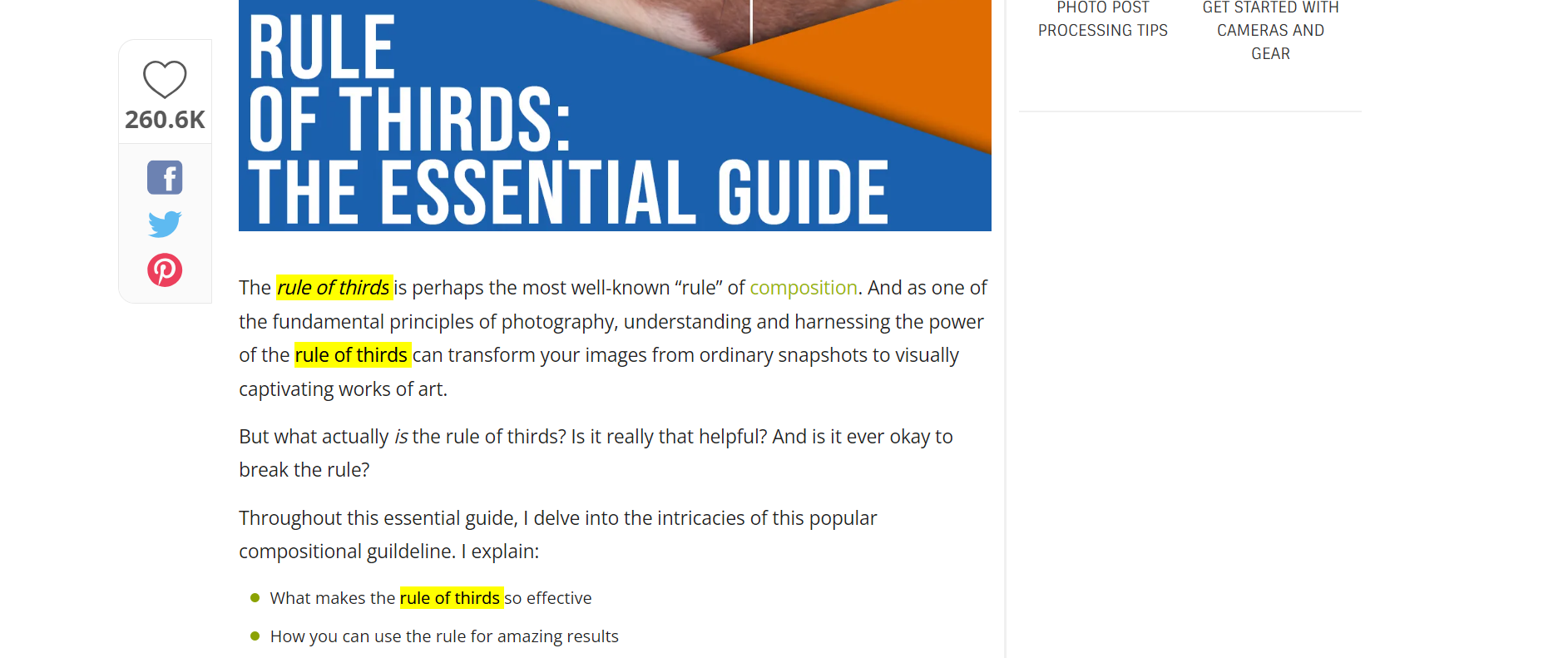
The keyword "rule of thirds" appears 83 times throughout the article, giving Google a solid understanding of what the content covers. But the article is nearly 4,000 words, so the keyword density stays natural. The writer hasn't jammed keywords into a short post.
Only include keywords where they make sense. Google and other search engines penalize keyword stuffing.
Headings and sub-headings are also excellent spots for keyword placement.
Google uses them to understand your content's structure, so implementing keywords in headings can help search engines index your page faster.
But modern SEO goes beyond basic keyword placement. Surfer's analysis of 1 million SERP results found that topical coverage is the strongest on-page signal tied to rankings. Pages that covered roughly 74% of relevant subtopics consistently outperformed those covering only 50%.
This means your website content should be thorough. Cover the topic completely, address related questions, and use semantic variations of your keywords rather than repeating the exact same phrase.
A separate study of 1 million pages also confirmed that word count alone is not a ranking factor. What matters is whether your content uses the right terms and covers the topic in sufficient depth.
You can use content optimization tools like Surfer to identify relevant search terms, related topics, and how often to include them in your article.
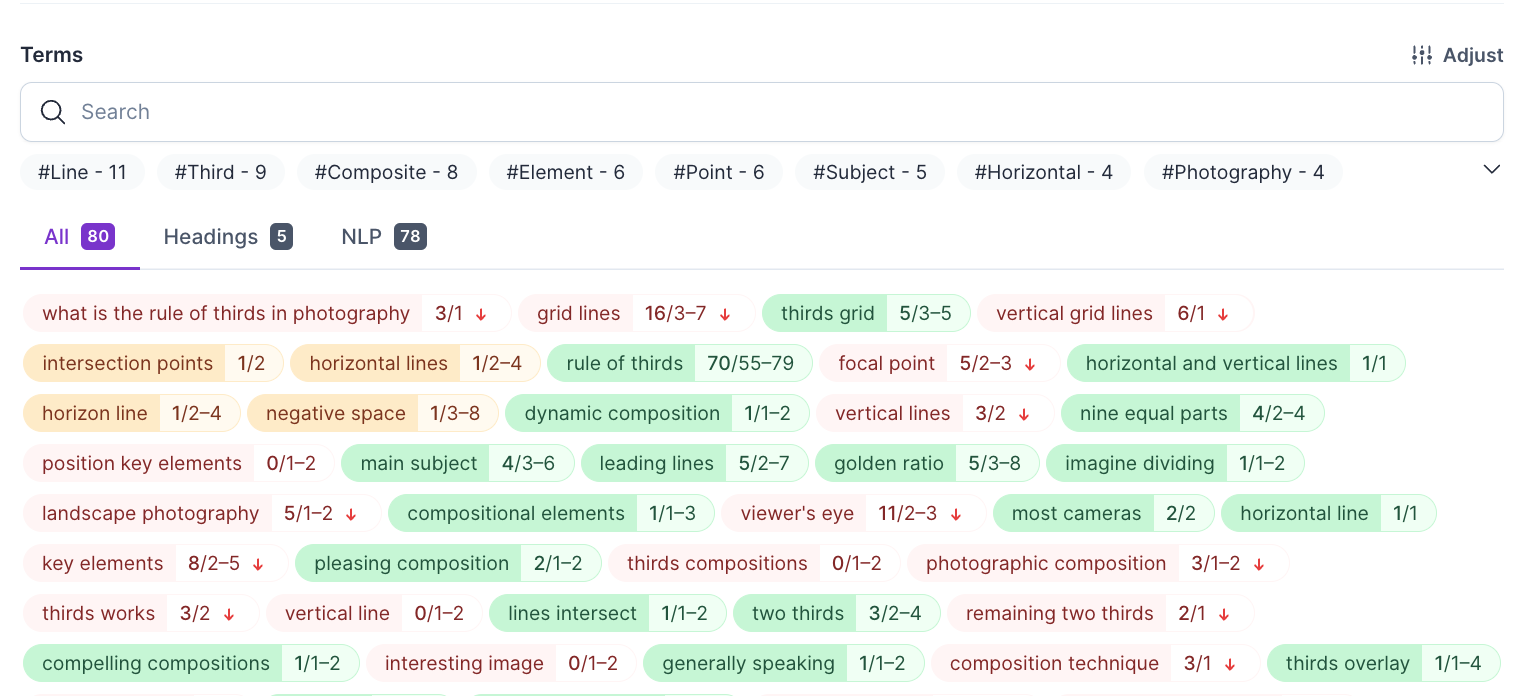
It's also worth considering how AI search is changing the landscape. Google AI Overviews now appear in 47% of all searches, and they tend to cite pages that are comprehensive and well-structured. Writing content that directly answers questions with clear, factual statements increases your chances of being cited.
Here are a few more SEO essentials:
Use internal links
Add links in your content leading to your other web pages. This helps search engines navigate and index your website faster.
Optimize meta tags
These are the page titles and descriptions that appear in search results. Include your main keyword here and be descriptive, yet concise.
Optimize page URL
Your page's URL structure should accurately reflect its content and include keywords.
7. Write in first person
First-person pronouns help establish a more personal connection with readers, which makes you more relatable and credible.
This also ties into what Google calls E-E-A-T (Experience, Expertise, Authoritativeness, and Trustworthiness). When you share your own experiences and opinions using "I" and "we," it signals to both readers and search engines that a real person with real knowledge wrote the content.

For example, an author from Fluent in 3 Months uses first-person pronouns along with personal stories and photographs from her time in Japan to teach readers about the basics of the Japanese language.
This makes the blog more engaging and simultaneously backs up her expertise to demonstrate she has the knowledge necessary to teach readers the language.
She uses phrases like "Why me? I have a university degree in Japanese," for example.
This way, the author also infuses her personality into the blog post, which makes for a much more memorable and impactful reading experience.
8. Show them who you are
An author's byline can further remind readers that the content is written by a human and reinforce your credibility.
This matters more than ever. Google's E-E-A-T framework (Experience, Expertise, Authoritativeness, Trustworthiness) rewards content that demonstrates who wrote it and why they're qualified. A profile picture, relevant credentials, and a few details about your background help establish strong personal connections with the audience.
Pinch of Yum does this well.

The bio goes into brief details about the author.
It's written in a friendly, engaging manner. You can also link your byline to your About page, which should follow a similar format.

Pinch of Yum's About page focuses on the site's creator, not the brand itself. It provides a snippet of her personal life, hobbies, and professional experience.
This goes a long way in showing off the brand's personality to make it more memorable — much more so than a generic company's About page explaining its mission, vision, and values.
That said, don't be afraid to break the ice and let readers get to know you on a more personal level.
9. Encourage action
Visitors won't convert unless you let them know you want them to.
Your Calls To Action (CTAs) must be obvious, while the copy should let visitors know exactly what happens once they click on the button.
Avoid generic copy like "Submit" or "Download," for example — it's vague and doesn't compel users to take action.
You should follow James Clear's example instead:
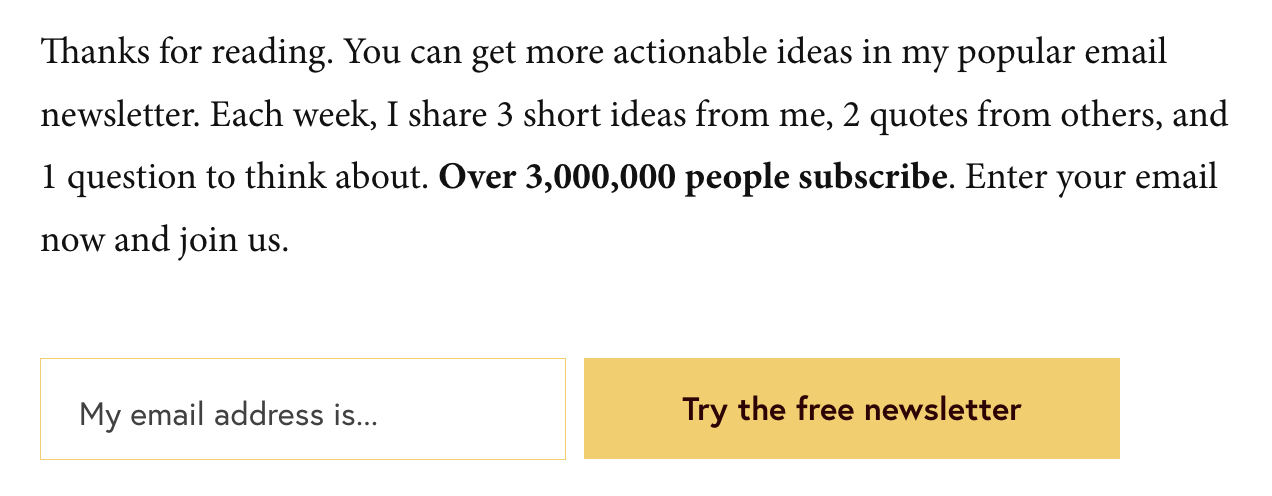
Although placed at the bottom of the web page, the bright yellow color contrasts the white background, making it highly visible.
The CTA button's copy is crystal clear and lets users know exactly what happens if they type in their email address.
Also, the author adds extra context just above the button to explain the newsletter's content, while the emboldened texts serve as social proof—they give visitors extra reassurance and motivate them to sign up.
Whether it's for application forms, feedback surveys or demo requests, encouraging action can help conversion rates. Go further and experiment with your CTAs to learn what works best for your case.
10. Grab attention with a strong headline
Your headline is the first point of contact you have with your audience.
Whether you write blog posts or copy for sales pages, social media posts, or advertisements, your headlines have to be enticing enough to get readers to click and learn more about what's behind them.
Keep them short and sweet as a general rule of thumb, but find a way to let readers know how they'll benefit from reading your content.
Headlines like "Copywriting Tips" won't cut it. Although straight to the point, it's bland and doesn't give readers enough incentive to click.
Here's what Copyblogger does instead:

The headline quickly brings up the target audience's main pain point — writer's block.
It then uses powerful words and phrases like "Become a Master" and "Only" to add additional impact.
"3 Hours a Day" is also an excellent tactic. It's specific and lets readers know exactly the amount of effort they need to put in to apply the tips mentioned in the blog post.
You can also use numbers in headlines like "10 Proven Copywriting Tips to Write Copy That Sticks," for example.
The idea is to give readers a snippet of your blog's content and hint at how long it would take them to read through it — it helps set clear expectations and eliminates any potential uncertainties.
Also use power words like "Essential," "Ultimate," and "Proven" to add more weight to your headlines for a more powerful impact.
11. Make your content skimmable
No one likes to read through huge blocks of text.
A 2,000-word blog post that looks like it's glued together is difficult to read and will cause visitors to leave at some point throughout the content.
Double-space your paragraphs and add bullet points to break down your texts, give them some breathing room, and make them easy on the eyes.
Also, make proper use of subheadings to make it easier for readers to skip ahead and find the specific information they're most interested in.
For example, Zety's blog post is dead easy to read:
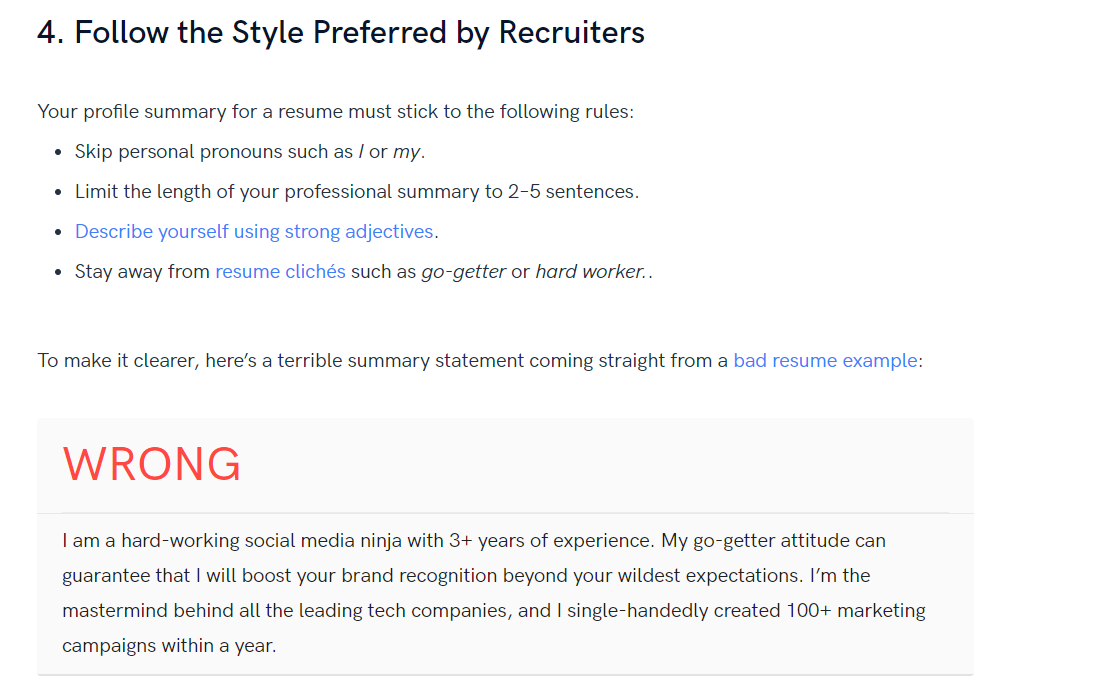
The blog post effectively uses numbered sub-headings and bullet points to be straight to the point and provide clear, actionable information.
It also uses dedicated text boxes to show resume summary examples—a clever idea to draw attention to them and simultaneously separate the examples from the rest of the text to avoid confusing people who just glance over the content.
You can also use double-spacing to highlight important ideas and give them additional impact.
12. Include media
Media files like images, infographics, and videos also help the reading experience. They break your content apart and visually back up your ideas for better comprehension.
They are also excellent for SEO.
They open up the opportunity to apply image SEO best practices, like adding keywords in alt text and file names — it can give you an extra boost in search engine results.
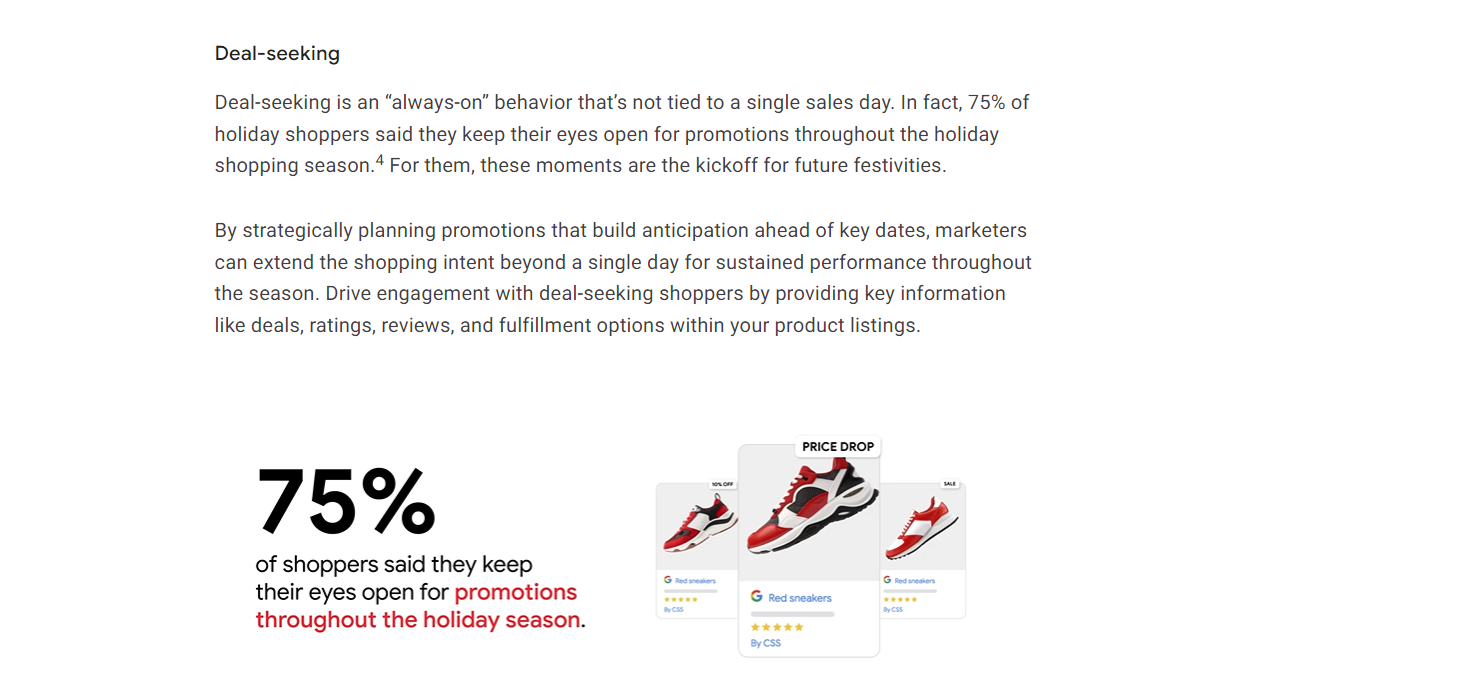
Think With Google uses neatly animated visuals to highlight important statistics.
Of course, you don't necessarily have to create animations, either, but using dedicated charts or infographics for statistics is an excellent idea—they're easy to understand and highly shareable.
For other types of content, you can also use your personal photographs — just like in the Fluent In 3 Months example shown above.
Real pictures help anchor your content to real life and establish a personal connection with readers.
In any case, don't add visuals just for the sake of it — that means no stock photos. It adds no value to your content and makes it look superficial.
Also, keep in mind that visuals are heavy hitters in terms of loading speed.
Always compress your images with tools like Compressor.io or Smush (for WordPress) before you upload them.
13. Update your content regularly
Content writing isn't just a post-it-and-forget-it practice.
You need to routinely revisit your posts and provide up-to-date information.
This helps you create high-quality content that maintains relevance and ensures the same piece brings a steady flow of new visitors over time.
For example, rather than writing a new post from scratch Hootsuite continuously updates its blog about social media trends — a topic with a generally short lifespan — with new sections and statistics.

The reason for this is two-fold.
For one, updating existing content is always easier than writing a new piece from the ground up.
Second, Hootsuite's blog post already does well in terms of search rankings — a new, separate post might take a while until it achieves similar results.
Updating the existing piece ensures that it always maintains high positions in the SERP and brings consistent traffic.
That said, make sure to regularly research topics you have written about in the past and see if there are any new details you could implement.
This is where Google's People Also Ask (PAA) or Google Trends come in handy.
Google Trends tracks search trends around a specific topic, including questions users may be highly interested in at any given time.
You can also use PAA results to identify any new questions visitors may have about a topic you covered and update your content accordingly.
Type in your keyword in the search bar and see what pops up.
Surfer's Auto-Optimize feature allows you to update existing articles with new information automatically.

Clicking the feature tells Surfer's algorithms to analyze your article, look for missing information and keywords, and plug those gaps to improve its content score without changing its original meaning and readability.
14. Link to sources
You need to back up your statements with concrete evidence from reputable sources. This will help visitors verify your claims and give your ideas more weight.
For instance, "The global social media userbase grew in 2023" isn't good enough — the sentence is vague, lacks credibility, and doesn't provide any quantifiable information.
In contrast, "The global social media userbase grew by 8% in 2023, reaching 5.04 billion users by January 2024" is much more specific.
The hyperlink also lets users verify your data.
Research stats or facts regarding your main topic, include them in your content and provide hyperlinks to reputable sources.
Type in your main keyword + "statistics" in the search bar and see what you can find.
You should also consider an internal linking strategy.
In short, internal links are hyperlinks that lead users to other web pages within your website.
This encourages visitors to explore your website content, helping increase dwell times and decrease bounce rates.
At the same time, search engines will navigate your website and index its pages more easily.
Of course, these internal links must be relevant to each page you implement them on.
Consider topic clusters — a series of web pages covering a specific topic and its sub-topics in detail.
A topic cluster comprises the following elements:
- The pillar page: A page that covers a high-level overview of the topic in question.
- Supporting pages: A series of secondary pages, each providing in-depth information regarding your main theme's sub-topics.
- Internal links: Links that connect the pillar page to your supporting pages, and vice-versa.
As such, topic clusters help increase topical authority, establish a solid internal linking strategy, and generally boost search rankings.
For instance, Burpee includes multiple topic clusters.
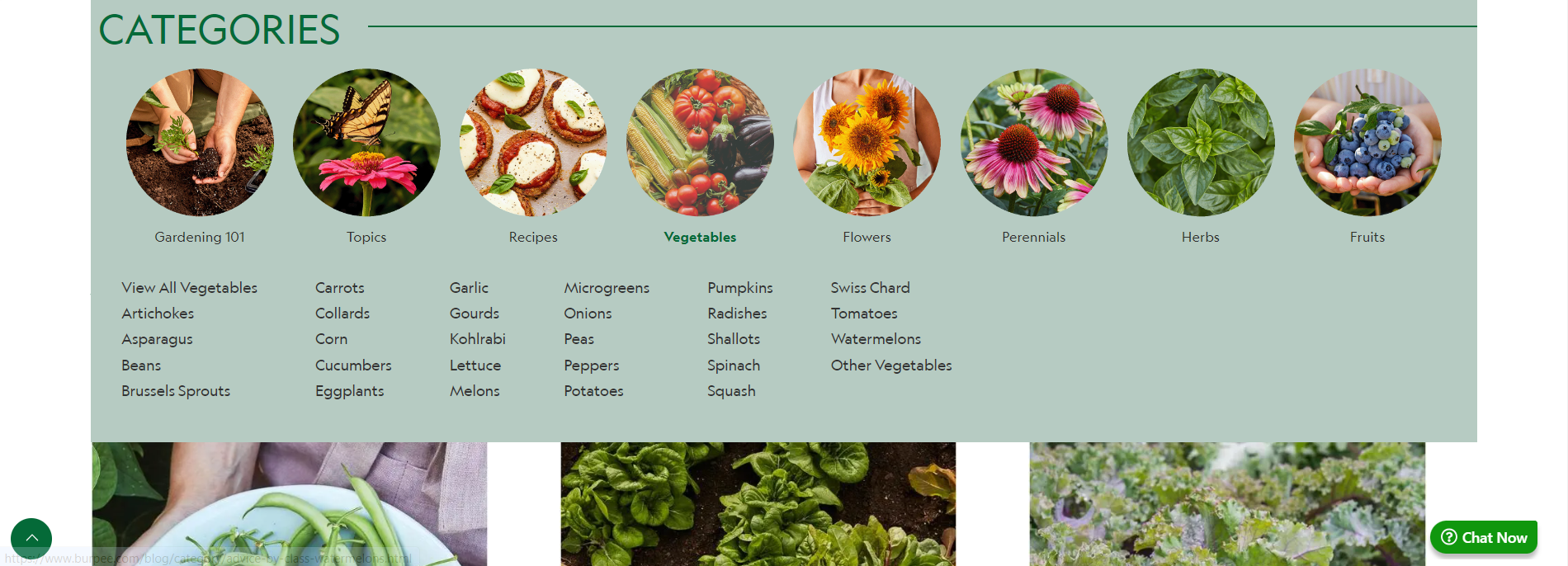
The website covers everything and anything gardening-related — from general tips to details about each specific flower, herb, fruit, or vegetable.
This helps the website establish itself as the ultimate resource of information for gardeners.
15. Use writing tools
Mistakes happen.
Typos, unclear sentences, or too much passive voice are almost inevitable. And these mistakes can easily go unnoticed — even if you proofread your website content.
The problem is that readers are not so forgiving.
No matter how well-researched or compelling your content may be, errors will make you look unprofessional and lose credibility.
Writing well-researched, high-quality content also takes time, effort, and specialization in most instances.
But you can use dedicated writing tools to make your job easier.
Surfer AI, for example, can generate a draft of your first version in a few minutes.
Instead of writing long-form content from scratch, use Surfer to generate content based on other pages of your choosing.
Edit and personalize the content to your liking before you publish.
This way, you'll save a couple of hours that it would take you to write an article from the start.
Take this 2500 word article for instance. It was generated in a couple of minutes, which would otherwise have taken me a few hours to come up with.

You can use additional tools too.
For example, Grammarly is an excellent free tool to spot any spelling and grammar errors and unclear sentences.
Hemingway Editor, on the other hand, helps improve your content's readability — it highlights passive voice, adverbs, and overly complex sentences.
16. Draw inspiration from competitors and others
Although original content is a must, you can still draw some inspiration from your competitors or other sites.
This helps you identify popular topics within your niche, pinpoint your competitor's gaps to fill them in yourself with fresh insights and see what content format is most effective.
Google's SERP is one of the best resources for inspiration — simply type in a seed keyword and check the top organic listings.
Suppose you want to write a product roundup about backpacking tents and type "best backpacking tents" in the search bar.
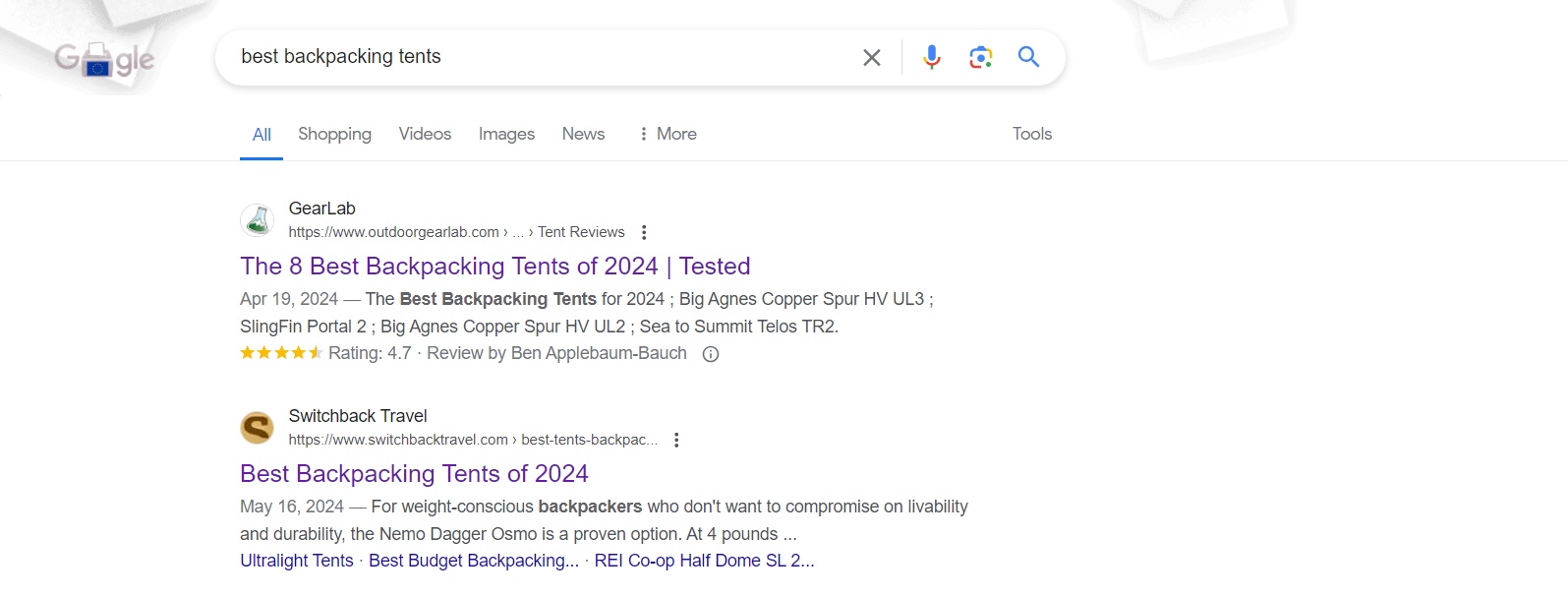
Here's the post from the first organic listing:
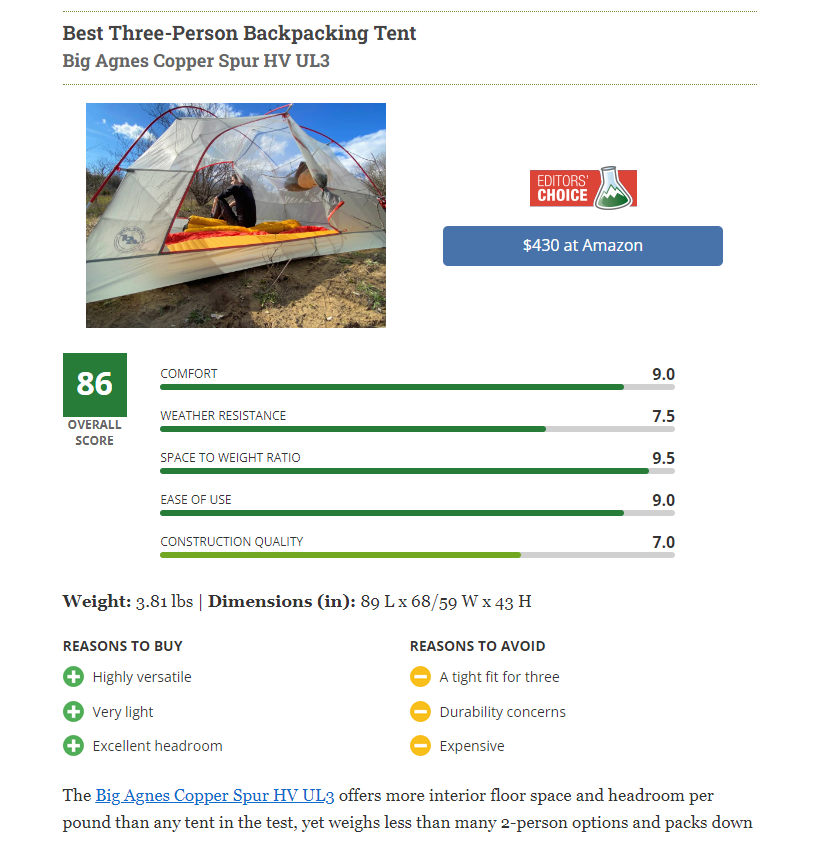
And here's the article from the second listing:

Both articles follow a highly similar format — long-form blog posts that highlight what each specific tent is best for in their sub-headings, along with a brief overview of their dimensions, pros, and cons, followed by detailed descriptions.
Since both pages occupy the top spots in search results, following a similar format and structure in your content could likely lead to higher rankings, too.
You can also perform SEO competitive analysis to get precise insights into industry trends, the keywords and audiences your competitors target, their performance metrics, and more.
17. Highlight social proof
Customer testimonials, reviews, or even logos of the companies you work with throughout your website can be a major conversion driver.
Even if your sales copy is persuasive, visitors will still seek extra reassurance from your existing customers before making a purchase decision.
As such, adding social proof helps clear up any uncertainties and gives potential customers that extra push they need to convert.
Here's how Smart Passive Income (SPI) implements social proof on its homepage:
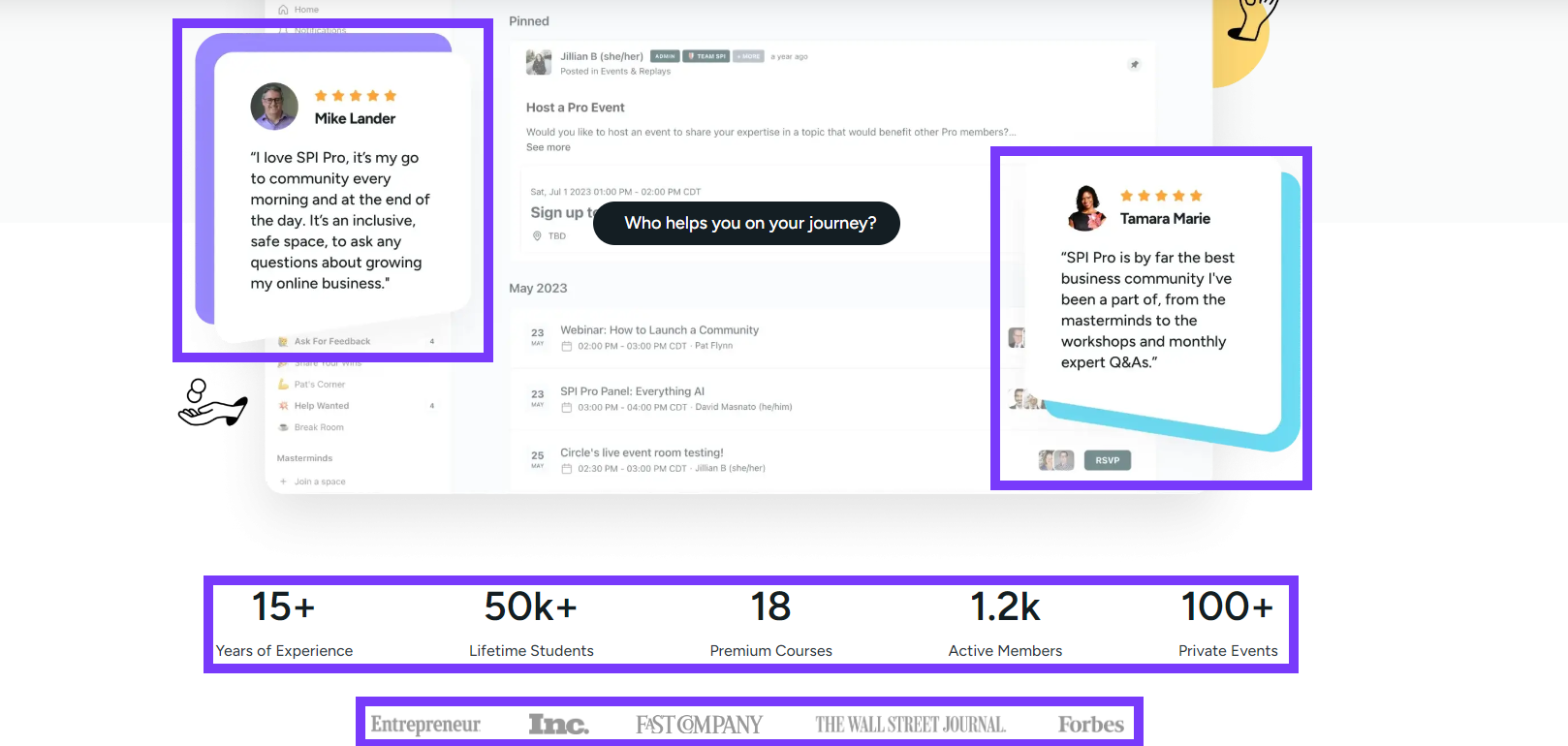
Notice how the testimonials also include the customers' names and profile pictures — they remind visitors that the feedback comes from real people, which helps make them more impactful.
The numbers listed below help users quantify the website's achievements and experience in the niche, while the trust badges beneath let them know SPI was featured in serious publications.
What skills does a website content writer need?
A website content writer needs a combination of creative and technical skills to produce content that connects with readers and performs well in search. Here are the core competencies:
- Strong writing and editing: Clear, grammatically correct prose that communicates ideas efficiently and keeps readers engaged.
- Research skills: The ability to find, evaluate, and synthesize information from credible sources to support claims and provide genuine value.
- SEO fundamentals: Understanding keyword research, on-page optimization, internal linking, and how search engines evaluate content quality.
- Audience awareness: Knowing how to tailor language, tone, and depth to the specific people you are writing for.
- AI tool proficiency: Familiarity with AI writing assistants and content optimization platforms to speed up drafting and improve content quality.
- Storytelling and creativity: The ability to turn complex or dry topics into engaging narratives that hold attention.
- Analytical thinking: Using data from tools like Google Analytics and Search Console to measure content performance and inform future decisions.
A good content writer also understands the E-E-A-T framework and knows how to demonstrate experience and expertise through their writing. Content management system (CMS) skills are useful too, since most writers publish their own work directly.
Start writing better website content
Great website content writing comes down to understanding your audience, providing genuine value, and structuring your pages so both readers and search engines can easily follow along. The 17 tips in this guide give you a clear framework for doing exactly that.
Start by defining your content's purpose and audience. Then focus on clear language, strong hooks, and thorough SEO optimization. Back up your claims with credible sources, keep your content updated, and let your personality come through.
The difference between a page that performs and one that doesn't often comes down to the small details: a tighter headline, a better CTA, or a few well-placed internal links. Apply these tips consistently and your website content will work harder for you over time.